The Japanese Secret of Ikigai
Find Your Purpose After 50
Most people spend years planning for retirement.
They save money. Meet with financial advisors. Decide where they'll live. Dream about travel and having more free time.
But there's one question many people never think to ask until retirement actually arrives:
What am I retiring to?
For many women, retirement—or simply reaching midlife—brings an unexpected shift.
At first, the freedom feels exciting.
No alarm clock.
No meetings.
No deadlines.
But after the honeymoon phase, many begin asking deeper questions:
Who am I if I'm no longer defined by my career?
What gives my life meaning now?
What do I want the next twenty or thirty years to look like?
How do I create a life that feels fulfilling instead of simply busy?
If you've asked yourself these questions, you're not lost.
You're becoming intentional.
That's the beginning of designing a life with purpose.
Purpose Isn't Something You Find—It's Something You Build
Many people think purpose is something you stumble upon.
The truth is, purpose is something you create through intentional choices, meaningful relationships, and living in alignment with your values.
Research consistently shows that people with a strong sense of purpose enjoy significant health benefits, including:
- Better physical and mental health
- Greater resilience
- Improved recovery from illness
- Lower risk of Alzheimer's disease and cognitive decline
- Greater life satisfaction
- Lower overall mortality
Purpose doesn't just improve how long we live.
It improves how well we live.
The Japanese Concept of Ikigai
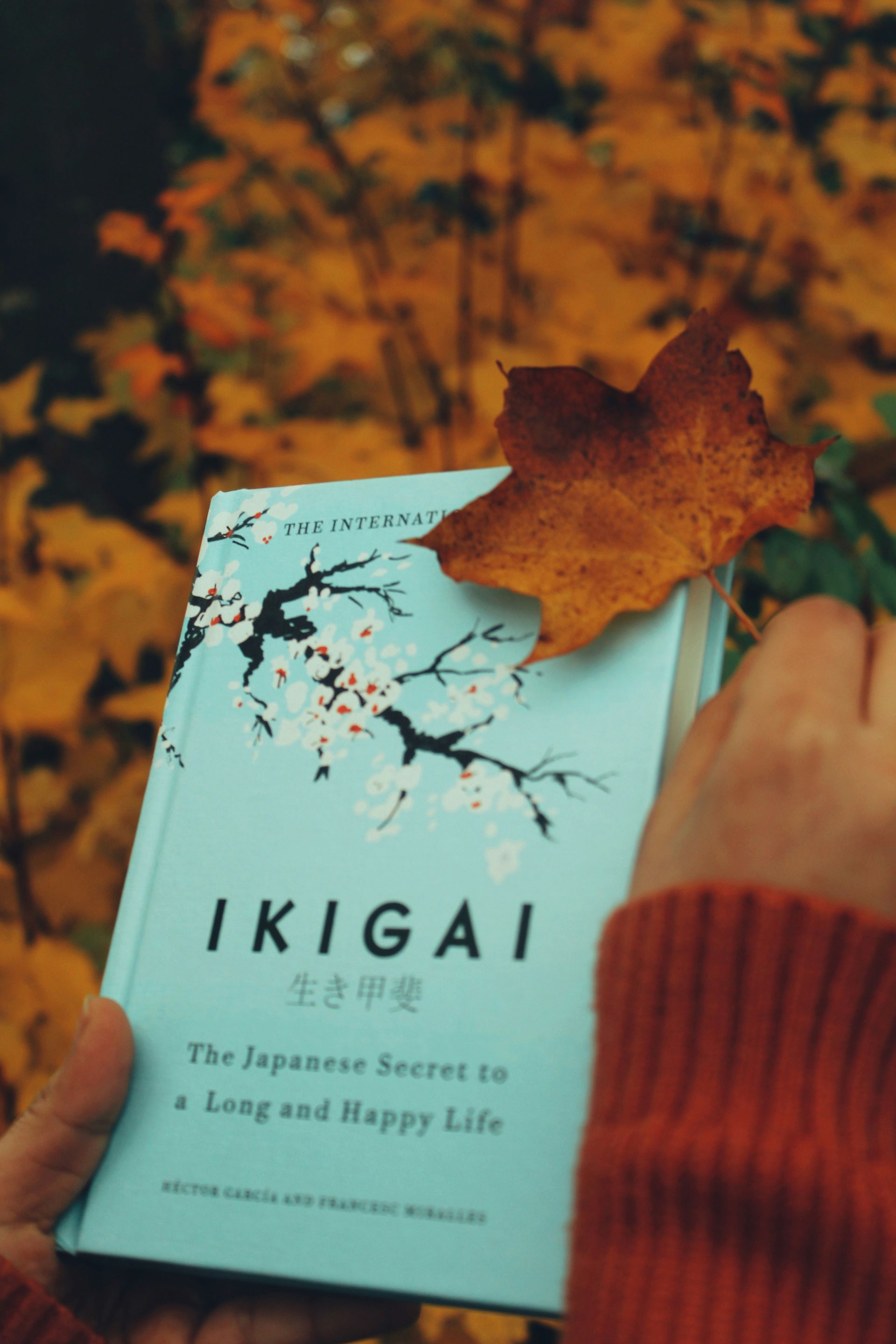
In Japan, there's a beautiful concept called Ikigai
It roughly translates to:
"A reason to get up in the morning."
While many people associate Ikigai with finding the perfect career, its true meaning is much broader.
Your Ikigai might be spending time with grandchildren.
- Growing a garden.
- Volunteering.
- Creating art.
- Helping a neighbor.
- Learning something new.
Purpose doesn't have to be extraordinary.
It simply needs to be meaningful to you.
The Six Components of Purpose
At Bold, Not Old™, I believe purpose is built through six interconnected areas.
1. Values: Know What Matters Most
Your values are your internal compass.
Many of us spend decades living according to expectations—from parents, employers, society, or even our own habits.
Eventually we have to ask:
What truly matters to me?
Whether your values are family, faith, creativity, health, service, adventure, compassion, or authenticity, they provide clarity for every important decision.
Reflection Question:
Does this choice move me toward the person I want to become?
Bold, Not Old™ Challenge:
Write down your five most important values.
Then compare them to your calendar.
Does your schedule reflect what matters most?
2. Meaning: Find Purpose in Everyday Life
Purpose isn't always about changing the world. Sometimes it's about changing one person's world.
Meaning often comes from:
- Relationships
- Kindness
- Gratitude
- Learning
- Overcoming challenges
- Helping others
- Creating beauty
- Being fully present
Psychologist Michael Steger describes meaning as consisting of three elements:
Coherence – My life makes sense.
Purpose – My life has direction.
Significance – My life matters.
Those three things are available at every stage of life.
Reflection Question:
When do you feel most alive?
3. Vision: Design Your Next Chapter
Many people retire from something. Very few retire to something.
Without a vision, life becomes reactive. With one, every year has direction.
Ask yourself:
- What do I want this decade to stand for?
- Who am I becoming?
- What adventures still excite me?
- What relationships deserve more attention?
- What do I still want to create?
Imagine you're 85 years old, looking back on today.
What would make you proud?
4. Contribution: We All Need to Matter
One of the biggest myths about retirement is that endless leisure creates happiness.
Research tells us otherwise.
People thrive when they continue contributing.
Contribution may look like:
- Mentoring
- Volunteering
- Grandparenting
- Teaching
- Starting a business
- Supporting your community
- Sharing your wisdom
Contribution reminds us of something deeply important:
I still matter.
5. Personal Growth: Never Stop Becoming
One of the greatest myths about aging is: "I'm too old."
Science strongly disagrees.
- The brain continues learning throughout life.
- Neuroplasticity doesn't disappear with age.
- Learning builds confidence.
- Curiosity strengthens cognitive reserve.
- Growth keeps us engaged with life.
Whether you learn a language, paint, write a book, travel, dance, or finally master technology, every new challenge helps you continue becoming who you were meant to be.
6. Spirituality & Faith: Connect to Something Greater
Purpose isn't always about doing. Sometimes it's about being.
Research shows that spirituality and faith are associated with:
- Greater resilience
- Lower depression
- Better coping during adversity
- Greater hope
- Stronger social connections
- Higher life satisfaction
For some people, that's church.
For others, it's prayer, meditation, nature, service, gratitude, or simply moments of awe.
The important question isn't:
"What religion are you?"
It's:
"What helps you feel connected to something bigger than yourself?"
As we age, those connections often become even more meaningful.
Your Purpose Statement
Purpose isn't a destination.
It's an ongoing conversation.
Ask yourself:
- What matters most?
- How do I create meaning?
- Where am I going?
- How can I contribute?
- How am I growing?
- What connects me to something greater?
Then spend twenty minutes writing your own Purpose Statement.
Complete these prompts:
- The values I want to live by are...
- I want this next chapter of my life to be remembered for...
- The people I most want to impact are...
- The gifts I want to share are...
- I know I'm living with purpose when...
Keep it where you'll see it often. Purpose isn't something you discover once. It's something you choose—again and again.
Final Thought
Midlife isn't the end of your story.
Retirement isn't the finish line.
It's an invitation to intentionally design a life that reflects your values, your passions, your gifts, and your faith.
At Bold, Not Old™, we believe successful aging isn't simply about living longer.
It's about creating a life worth getting older for.
Absolutely. Here's a polished blog article based on your video script that is optimized for readability, SEO, and your Bold, Not Old™ brand.
Create a Life Worth Getting Older For: Finding Your Purpose After 50
Part of the Bold, Not Old™ Blueprint – Level 2: Design Your Life
Most people spend years planning for retirement.
They save money. Meet with financial advisors. Decide where they'll live. Dream about travel and having more free time.
But there's one question many people never think to ask until retirement actually arrives:
What am I retiring to?
For many women, retirement—or simply reaching midlife—brings an unexpected shift.
At first, the freedom feels exciting.
No alarm clock.
No meetings.
No deadlines.
But after the honeymoon phase, many begin asking deeper questions:
- Who am I if I'm no longer defined by my career?
- What gives my life meaning now?
- What do I want the next twenty or thirty years to look like?
- How do I create a life that feels fulfilling instead of simply busy?
If you've asked yourself these questions, you're not lost.
You're becoming intentional.
That's the beginning of designing a life with purpose.
Purpose Isn't Something You Find—It's Something You Build
Many people think purpose is something you stumble upon.
The truth is, purpose is something you create through intentional choices, meaningful relationships, and living in alignment with your values.
Research consistently shows that people with a strong sense of purpose enjoy significant health benefits, including:
- Better physical and mental health
- Greater resilience
- Improved recovery from illness
- Lower risk of Alzheimer's disease and cognitive decline
- Greater life satisfaction
- Lower overall mortality
Purpose doesn't just improve how long we live.
It improves how well we live.
The Japanese Concept of Ikigai
In Japan, there's a beautiful concept called Ikigai (pronounced ee-kee-GAH-ee).
It roughly translates to:
"A reason to get up in the morning."
While many people associate Ikigai with finding the perfect career, its true meaning is much broader.
Your Ikigai might be spending time with grandchildren.
Growing a garden.
Volunteering.
Creating art.
Helping a neighbor.
Learning something new.
Purpose doesn't have to be extraordinary.
It simply needs to be meaningful to you.
The Six Components of Purpose
At Bold, Not Old™, I believe purpose is built through six interconnected areas.
1. Values: Know What Matters Most
Your values are your internal compass.
Many of us spend decades living according to expectations—from parents, employers, society, or even our own habits.
Eventually we have to ask:
What truly matters to me?
Whether your values are family, faith, creativity, health, service, adventure, compassion, or authenticity, they provide clarity for every important decision.
Reflection Question:
Does this choice move me toward the person I want to become?
Bold, Not Old™ Challenge:
Write down your five most important values.
Then compare them to your calendar.
Does your schedule reflect what matters most?
2. Meaning: Find Purpose in Everyday Life
Purpose isn't always about changing the world.
Sometimes it's about changing one person's world.
Meaning often comes from:
- Relationships
- Kindness
- Gratitude
- Learning
- Overcoming challenges
- Helping others
- Creating beauty
- Being fully present
Psychologist Michael Steger describes meaning as consisting of three elements:
- Coherence – My life makes sense.
- Purpose – My life has direction.
- Significance – My life matters.
Those three things are available at every stage of life.
Reflection Question:
When do you feel most alive?
3. Vision: Design Your Next Chapter
Many people retire from something.
Very few retire to something.
Without a vision, life becomes reactive.
With one, every year has direction.
Ask yourself:
- What do I want this decade to stand for?
- Who am I becoming?
- What adventures still excite me?
- What relationships deserve more attention?
- What do I still want to create?
Imagine you're 85 years old, looking back on today.
What would make you proud?
4. Contribution: We All Need to Matter
One of the biggest myths about retirement is that endless leisure creates happiness.
Research tells us otherwise.
People thrive when they continue contributing.
Contribution may look like:
- Mentoring
- Volunteering
- Grandparenting
- Teaching
- Starting a business
- Supporting your community
- Sharing your wisdom
Contribution reminds us of something deeply important:
I still matter.
5. Personal Growth: Never Stop Becoming
One of the greatest myths about aging is:
"I'm too old."
Science strongly disagrees.
The brain continues learning throughout life.
Neuroplasticity doesn't disappear with age.
Learning builds confidence.
Curiosity strengthens cognitive reserve.
Growth keeps us engaged with life.
Whether you learn a language, paint, write a book, travel, dance, or finally master technology, every new challenge helps you continue becoming who you were meant to be.
6. Spirituality & Faith: Connect to Something Greater
Purpose isn't always about doing.
Sometimes it's about being.
Research shows that spirituality and faith are associated with:
- Greater resilience
- Lower depression
- Better coping during adversity
- Greater hope
- Stronger social connections
- Higher life satisfaction
For some people, that's church.
For others, it's prayer, meditation, nature, service, gratitude, or simply moments of awe.
The important question isn't:
"What religion are you?"
It's:
"What helps you feel connected to something bigger than yourself?"
As we age, those connections often become even more meaningful.
Your Purpose Statement
Purpose isn't a destination.
It's an ongoing conversation.
Ask yourself:
- What matters most?
- How do I create meaning?
- Where am I going?
- How can I contribute?
- How am I growing?
- What connects me to something greater?
Then spend twenty minutes writing your own Purpose Statement.
Complete these prompts:
- The values I want to live by are...
- I want this next chapter of my life to be remembered for...
- The people I most want to impact are...
- The gifts I want to share are...
- I know I'm living with purpose when...
Keep it where you'll see it often.
Purpose isn't something you discover once.
It's something you choose—again and again.
Final Thought
Midlife isn't the end of your story.
Retirement isn't the finish line.
It's an invitation to intentionally design a life that reflects your values, your passions, your gifts, and your faith.
At Bold, Not Old™, we believe successful aging isn't simply about living longer.
It's about creating a life worth getting older for.
References
- Boyle, P. A., et al. (2010). Purpose in Life and Risk of Incident Alzheimer's Disease and Mild Cognitive Impairment in Community-Dwelling Older Persons. Archives of General Psychiatry.
- Boyle, P. A., et al. Research on purpose in life and cognitive decline, Rush University Medical Center.
- Steger, M. F. The Psychology of Meaning in Life. Research on coherence, purpose, and significance as components of meaning.
- Frankl, V. E. (2006). Man's Search for Meaning. Beacon Press.
- Leider, R. J. (2015). The Power of Purpose: Find Meaning, Live Longer, Better. Berrett-Koehler Publishers.
- Seligman, M. E. P. (2011). Flourish: A Visionary New Understanding of Happiness and Well-being. Free Press.
- Hayes, S. C., Strosahl, K. D., & Wilson, K. G. (2016). Acceptance and Commitment Therapy: The Process and Practice of Mindful Change (2nd ed.). Guilford Press.
- Vaillant, G. E. (2002). Aging Well: Surprising Guideposts to a Happier Life from the Landmark Harvard Study of Adult Development. Little, Brown.
- Koenig, H. G. Numerous studies on spirituality, religion, health, and aging, including Handbook of Religion and Health.
- Burnett, B., & Evans, D. (2016). Designing Your Life.
- Buettner, D. (2012). The Blue Zones.
- Smith, E. E. (2017). The Power of Meaning.